LA RINCONADA (SEVILLA), 14 (EUROPA PRESS)
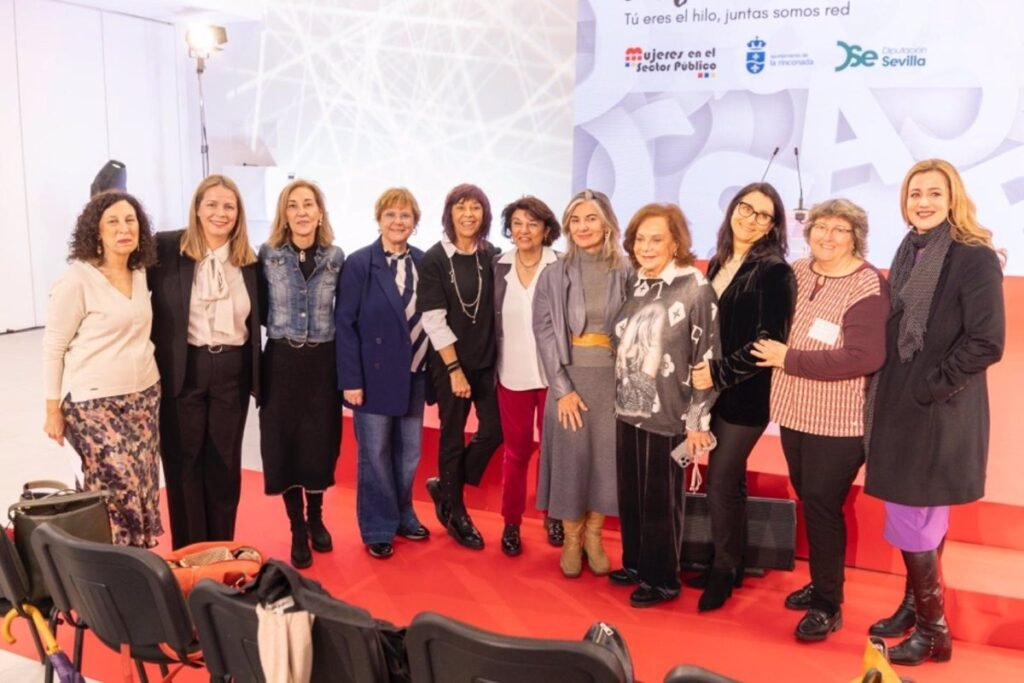
The association ‘Mujeres en el Sector Público’ celebrates a conference in La Rinconada (Seville) in favor of integrating cross-cutting policies in administrations to promote equality.
The vice president of the association, Carmen Seisdedos, spoke on behalf of this association, which has 600 members in Spain, 100 of them in Andalusia.
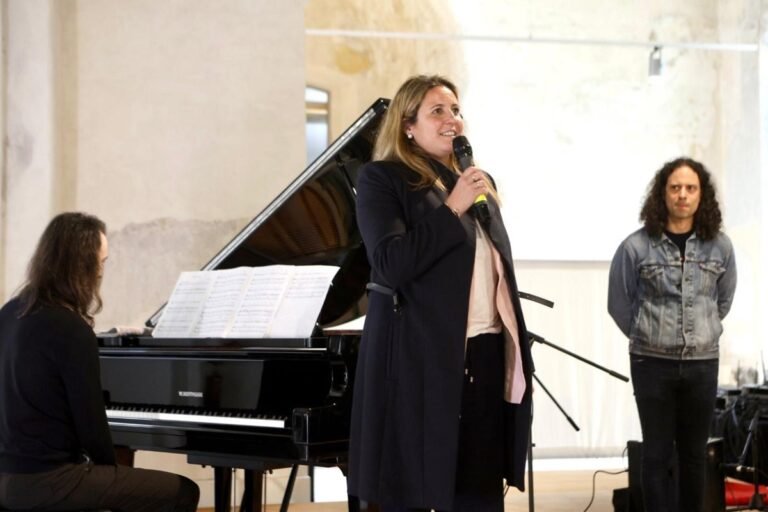
The host of the event was María Nieto who, first, along with the vice president of the organization, invited the provincial deputy of Social Cohesion and Equality of the Seville Provincial Council, Encarnación Fuentes, and the First Deputy Mayor of the La Rinconada City Council, Raquel Vega, to take the stage.
Fuentes mentioned that «we all want more equal administrations, not with an abstract approach, but by working on a model that demonstrates full equality to progress.»
Next, Raquel Vega took the floor to emphasize that «we must be clear that feminism consists of millions of women with diverse and heterogeneous thoughts. Different women. Just as we must be clear that equality is not just on March 8th. Equality means constant and concrete cross-cutting public policies that touch all areas, that permeate all decisions. The government of Spain, in the autonomous communities, and also in cities, like in the La Rinconada City Council, places equality policies at the heart of political management.»
«We develop a good number of specific plans and programs, we work throughout the year with educational centers, and we incorporate shows in our extensive cultural program that advocate for equality.»
Afterwards, another councilor from the La Rinconada City Council, Noelia Ramírez, responsible for Equality in the Council, welcomed Soledad Murillo, councilor of the Madrid City Council, who spoke about the demands for equality in public administrations.
«Public policies are the only generators of rights, backed by laws,» while acknowledging that «administrations were not designed for cross-cutting policies, so now they have to promote equality and correct discrimination.» The sociologist highlighted that «equality is full of obstacles. They consider us a group with special difficulties in reconciliation, which is a problem of lack of shared responsibility. Paradoxically, women are the ones who have constantly improved professions, and yet, we are limited because they consider us a group with special difficulties.»
Following the presentation, it was time for the roundtable discussion. Raquel Vega once again took the floor to moderate and lead the discussion in which Ana Báez, architect of the Huelva Provincial Council; Elena Marín, General Director of Social Cohesion and Equality of the Seville Provincial Council; and Silvia Muñoz, Communication Manager of the Granada Provincial Council, participated.
On the path to equality, Ana Báez called for «being very feminist»; Elena Marín emphasized «setting an example as professionals and as women, something that is contagious»; and Silvia Muñoz urged women to «speak up and be named.» Afterwards, there was a presentation of the association by members Beatriz Sánchez, María Nieto, and María Luisa Marabotto. They analyzed the different actions they carry out, how they work, what aspects they emphasize the most, and what areas of action they focus on and the progress made.